With a sprawling empire spanning electric vehicles, rockets, artificial intelligence, and social media, Elon Musk has built a reputation as one of the most influential—and unconventional business leaders of the modern era. And as SpaceX eyes a potentially record-setting public offering, the billionaire’s path to potentially becoming the world’s first trillionaire is once again fueling fascination with how he built his success.
But few people have witnessed how Musk operates up close quite like Jon McNeill.
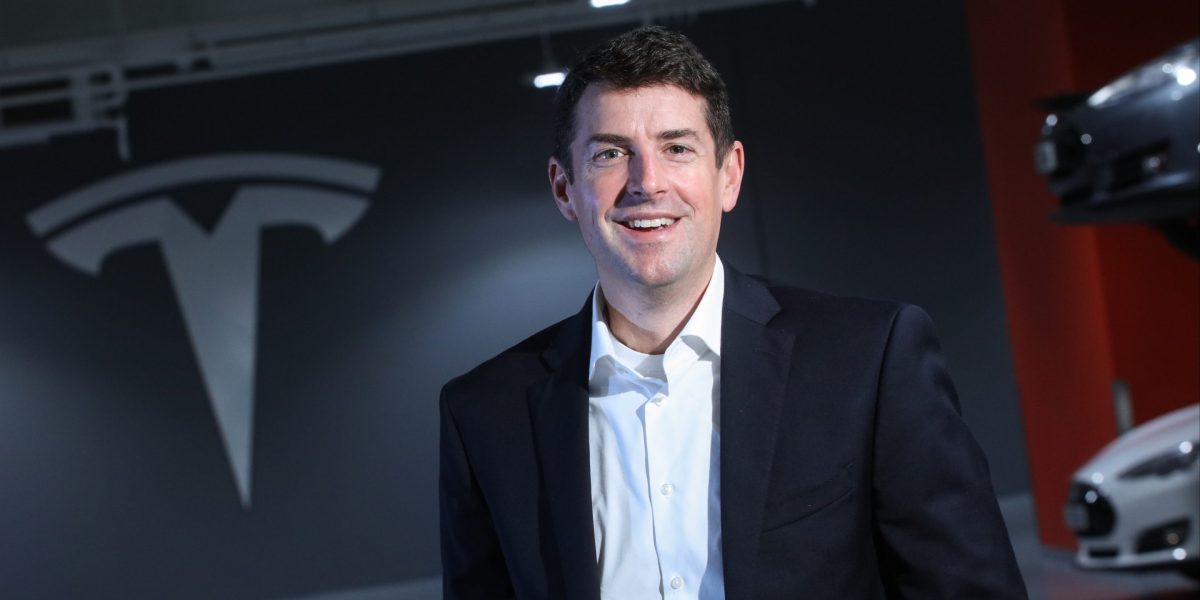
As Tesla’s president from 2015 to 2018, he worked alongside Musk during one of the company’s most pivotal stretches, helping oversee the rollout of the Model X and the turbulent production ramp-up of the Model 3—a period when Tesla came perilously close to bankruptcy.
However, the success of Musk, and subsequently Tesla, wasn’t necessarily driven by charisma, luck, or even raw intelligence alone, according to McNeill. Instead, it came from an obsessive willingness to challenge assumptions.
“He’s a pretty uniquely-wired individual, obviously,” McNeill told Fortune, reflecting on his former boss. “He’s thinking about stuff at a depth, constantly, and he frees up time in his day to think about these big challenges, and then figures out a way to go after them.”
While Musk’s leadership style can often appear chaotic from the outside, McNeill said there was a repeatable logic behind it. In his book, The Algorithm, he distilled Musk’s operating philosophy into a five-step framework:
- Question every requirement,
- Delete every possible step in the process,
- Simplify and optimize,
- Accelerate cycle time,
- Automate last.
The framework proved integral during Tesla’s growth years, McNeill recalled, helping solve manufacturing bottlenecks tied to the Model X and scale the company from roughly $2 billion in revenue to $20 billion.
And since leaving Tesla, McNeill has carried the philosophy throughout the rest of his career—from serving as chief operating officer at Lyft to joining the boards of General Motors and Lululemon, while also leading his venture capital firm DVx Ventures.
“I feel that The Algorithm is a framework that anybody can apply,” McNeill added. “You don’t have to be Elon Musk to do this.”
How Musk determines who’s fit to work at his companies, according to Tesla’s former president
For all of Elon Musk’s outsized influence, the billionaire’s companies are designed to thrive even when he isn’t in the room.
During McNeill’s time at Tesla, Musk was juggling multiple ventures, meaning Tuesday was often the only day fully dedicated to the electric vehicle maker. The rest of the week, the company relied on teams empowered to move quickly and solve problems on their own.
According to McNeill’s book, much of the genius in Musk’s companies was due to his smart employees using the five-step process, which enabled them to question everything and innovate—all without Musk.
Still, not everyone is cut out to work inside Musk’s high-pressure ecosystem.
“He demands to only work with world-class talent,” McNeill told Fortune, describing the type of employees Musk values as “10Xers”—people who, when handed a challenge, often deliver 10 times the output of an average worker.
“We made so much forward progress because the capabilities of our people were so high,” McNeill added. ”It was like asking an army of completely special horses, and you asked them to go see these objectives, and they just do it. And then come back hungry for more.”
The employees who thrived most under Musk tended to share an unusual mix of four traits: humility, capability, confidence, and curiosity, according to McNeill.
Faced with one of Musk’s seemingly impossible mandates, those strong employees rarely pretended to already know the solution. Instead, McNeill said, their instinct was often: I don’t know how to do that. What separated them was what came next:
“‘Challenge accepted, we’ll figure it out.’”
Beyond Tesla, executives agree the right attitude can make a world of difference
The framework for identifying top performers at Tesla echoed a message increasingly shared by other executives: raw talent matters, but mindset may matter even more.
Amazon CEO Andy Jassy, for example, has argued that attitude can have an outsized impact on long-term career success—particularly for young people just beginning their professional lives.
“An embarrassing amount of how well you do, particularly in your twenties, has to do with attitude,” Jassy said in a conversation with LinkedIn in 2024.
For former Workday CEO Carl Eschenbach, the importance of attitude stems from lessons learned well before the C-suite, beginning during his time as a competitive wrestler.
“The attitude that you bring to the office—and to your employees, your peers, and the people you serve alongside every day—is what ultimately will determine a lot of your success,” Eschenbach said on McKinsey’s Inside the Strategy Room podcast last year.
“I often say your altitude in life is completely determined by your attitude in life.”
The message extends well beyond Silicon Valley. Kurt Alexander, president of Omni Hotels & Resorts, previously told Fortune that one of the most important traits he looks for in job candidates is a willingness to work hard and serve others.
“We can teach you the hospitality business,” he said. “But do you have an attitude and a willingness to serve people? Because that’s the business we’re in, and it’s hard work, and it’s not sexy in many respects, but it’s good work and there’s a lot of dignity in it.”